




















 Netherlands
 Germany
 France
 Italia
 España
 Sverige
 International
Light, Dark, Stress & Sleep: Lost Rhythms That Our Bodies Need
Did you know that the human body is deeply rhythmic? Before schedules, clocks, and artificial light, our biology followed patterns shaped by the natural world. Light signaled when...


Want to go to your dedicated store?
Did you know that the human body is deeply rhythmic? Before schedules, clocks, and artificial light, our biology followed patterns shaped by the natural world. Light signaled when...

Did you know that the human body is deeply rhythmic? Before schedules, clocks, and artificial light, our biology followed patterns shaped by the natural world. Light signaled when to wake.
Darkness signaled when to rest. Hormones rose and fell in response to the sun, the seasons, and daily activity.
These rhythms guide everything from digestion to mood to sleep. However, today, many of them are disrupted.
Light is one of the strongest signals the body receives. Natural daylight entering the eyes in the morning tells the brain to suppress melatonin and increase alertness. Cortisol then rises gently to support energy and focus, and movement. As the day progresses and light fades, the body prepares for rest.
Darkness allows melatonin to rise, and the nervous system shifts toward recovery. You should start to feel tired and fall asleep easily.
Unfortunately, modern environments have removed this contrast that’s so important for sending our bodies the right signals.
For example, artificial lighting extends the day indefinitely, and screens emit blue light well into the evening. This means that our bodies receive mixed signals about whether it is time to rest or stay alert.
Exposure to artificial light after sunset interferes with melatonin production. Even small amounts of bright light can delay the body’s internal clock. When melatonin release is delayed, sleep onset becomes harder, and sleep quality often declines.
Over time, this disruption can affect your entire sleep cycle:
Sleep rhythms influence far more than rest. Circadian timing affects hormone release throughout the body. Thyroid hormones, reproductive hormones, growth hormone, and insulin sensitivity all follow patterns, too.
When circadian rhythm is disrupted, hormonal signaling becomes inconsistent. This can show up as energy crashes, mood changes, appetite dysregulation, and difficulty maintaining focus.
Restoring sleep doesn’t necessarily require perfection, but rather, there are small, consistent changes that can help the body recalibrate. Such as:
All of our bodies depend on rhythm to function optimally. Both light and darkness guide hormonal cycles, nervous system regulation, and sleep. However, modern environments can make these signals kind of blurry, leaving our body uncertain about when to rest and when to truly wake up.
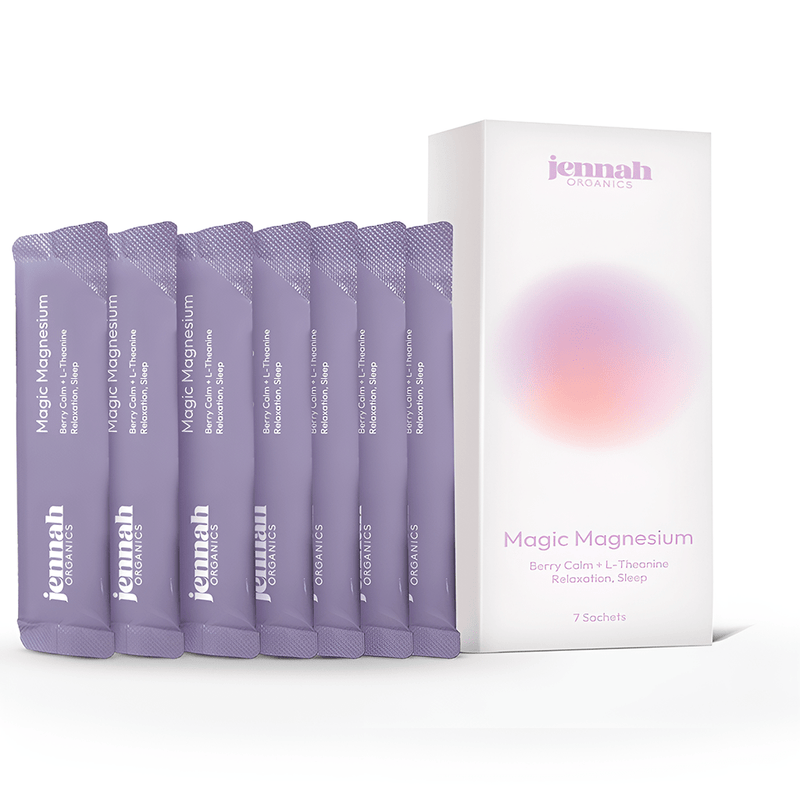
Sleep issues often reflect disrupted rhythms. Getting enough natural light at the beginning of the day and limiting artificial light in the evening is the first step. For even deeper regulation and relaxation, try Jennah Organics Magic Magnesium to promote deep rest and more restorative sleep.

Il carrello è vuoto.
Inizia a fare acquisti